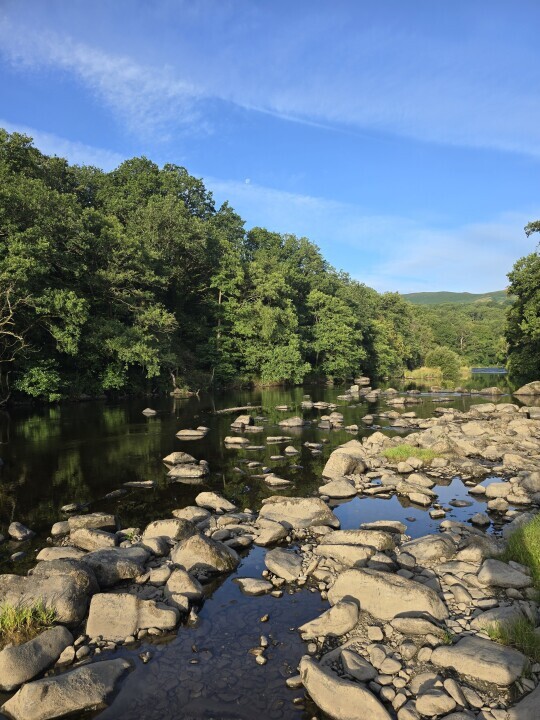
 Low water at Craig Llyn - NG from Salisbury
 “Very little rain where it is needed” came the voice of the weather forecaster.“And loads to come where it is not.”
Clearly he was trying to be funny, which never works with forecasters. It was as if the UK had been divided into a wet zone and a dry zone, just like Sri Lanka. The heat was building again as we entered August and there was no real sign yet of an ending to the drought. We learned that the previous month had been the driest July recorded since 1836, but then we have become quite accustomed to breaking records lately. Most of the local harvests were already in, taken early before the lack of water did any further damage to the crop. On the ridge at Llanishen, farmers Clive and Rob looked disconsolately at their potato field and the yellow leaves withering above dry furrows of dust. Here on top of the watershed between Wye and Usk there had been no surface moisture for weeks and a little spraying from a bowser behind the tractor had made only a slight difference. Maybe, if the rain comes, the tubers will fill out and that will be the time to get in a half decent potato crop. If the rain comes.
Meanwhile the cattle are already started on what had been the designated winter feed, necessarily so if they are to stay in milk. Clive has a kind of plan to build a dam blocking off a gulley below the farm where water does trickle during the winter. How many thousand gallons could be impounded there by creating a pond for summer use? Farmers used to get a grant for such irrigation projects; now the main concern seems to be to get any changes past the environmentalists. Apparently this year we can expect an excellent harvest for British wines, which is something to celebrate. I noticed that early blackberries are small, but very sweet, probably due to a similar equation of heat and mosture.
With the notable exception of Severn-Trent Water districts, most of southern Britain including all of Wales was living under a hose pipe ban during August. We started the drought with quite good reserves of water in the reservoirs due to the wet winter just past. However, these reserves were rapidly depreciated. For example Clwyedog Reservoir, which we pass during the climb from Llanidloes to Llyn Bugeilyn, and which is known for its boat fishing for rainbows, was down to 60% of capacity by the beginning of August. In theory it could be empty by the end of September. The upper Severn is regulated by planned releases from Clwyedog.
Dark clouds drifting slowly out of the west resulted in just a little shower falling after dawn on the 5th. The dust was hardly disturbed and we could smell the smoke of distant fires in the air. This was coming from Llangynidr, 30 miles away in South Wales and it could be detected as far away as Worcestershire and the Malverns. By the 6th the clear skies had returned. Some of the August early mornings became quite brisk and I took advantage of one to make a quick trip to the Bideford Brook before the dog walkers were out and about. The water was very low, but absolutely clear and the stones on the bottom looked clean. I measured the water temperature at 14 degrees and went up the stream with a 7 foot rod and 8 foot leader with a size 18 Rusty Klinkhammer on the business end. Once in the river I found a lot of shiny little black beetles clinging to overhanging alder leaves, which I suppose might have persuaded me to try a Foam Beetle. However, although there few natural rises, the little rusty coloured Klinkhammer proved persuasive enough from the start and I ended up with 8 trout from 6-9 inches. Despite the heat, the gravel and stones of the river bed continued clean most of the way up except in a couple of open spots where the sun had enough access to develop the algae. Unusually there is very little agriculture upstream from this point; just steep hills and mixed forest.
Wildfires continued to break out across the landscape and sometimes more than dry grass and shrubs were damaged. Fortunately there was no loss of life but 20 homes were burned in Stourport. Railway lines, these days no longer provided with an expansion gap, buckled in the heat and two trains derailed. The smell of smoke became a regular feature of the whole region. My wife’s phone rang on the emergency alert system, warning her not to light fires outside. And for some reason mine did not. Cobra had been meeting again and – as usual – the ever willing Army was being asked for support. Unsurprisingly, sale of disposable barbecue kits has been suspended. The Press, never willing to miss a good headline opportunity, were writing about Tinder Box Britain.
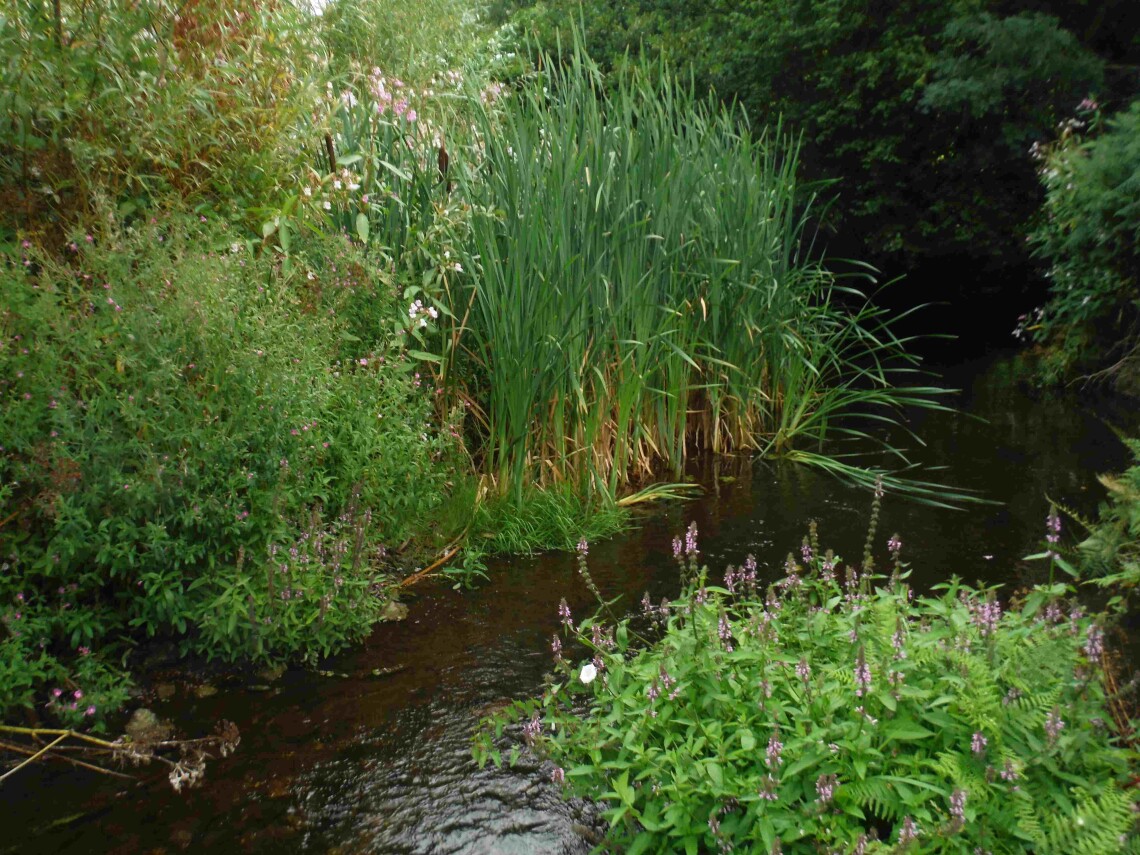 Bideford brook high summer
 Trout Fishing
Lake fishing has not been easy but some have managed creditable results. On the last day of July Jaroslav Lippinski from Merthyr Tydfil reported 4 trout from Llwyn On. Gabriel Novicky from Tredegar followed up with 3 fish on the next day while Gavin Bidmead from Merthyr Tydfil caught 3 more. John Porter from Ferryside had this to report from Llwyn On the same day: “Hot, still, warm water, bright sunshine, low water. Everything against it, no fish, but herons, red kites and buzzards. Lovely to be there. That’s what it’s all about.” A Cwmbran angler complained about discarded nylon left on the ground at the Usk Reservoir. Nick Fenton from Bridgend went deep in search of cool water in the Beacons Reservoir and caught 3 brown trout off the dam with a Mallard and Claret.
A Swansea angler cancelled a day booked on the upper Wye at Abernant due to conditions, but failed to agree a “temp-off” with the Wye and Usk Foundation. The point of difference, I imagine, would have been the water temperature as the WUF described conditions as not ideal but nevertheless fishable. 20 degrees is the considered the critical point for salmonids (25 degrees for cyprinids) and you will get different readings according to the time of day and where exactly in the river you take the reading.
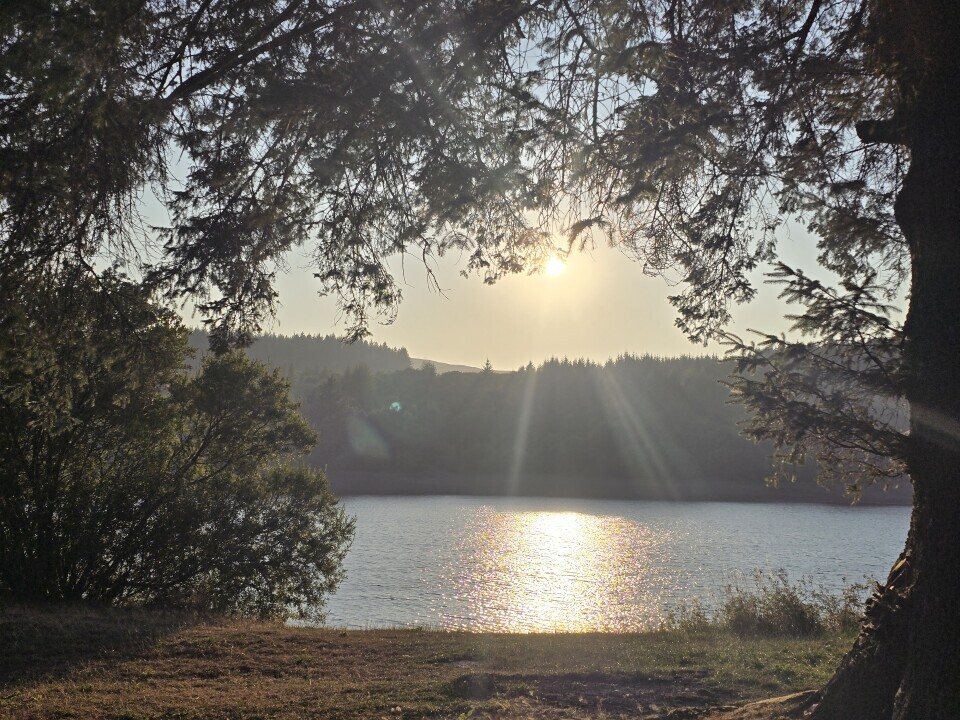 Llwyn On - Jan Beles
 Barry Anderson from Gaydon sent a report full of praise for the sympathetic management at Llyn Craig on the upper Wye. This fishery was once known as Doldowlod Common and was famous above all things for the large spring salmon which used to gather as early as January in its deep pools. It also had a reputation for what were called “bull trout,” but today it is probably better known for its grayling fishing. This part of the river is also early to receive any compensating cool outflow from the Elan valley dams and I think we had some advantage from this during August. A Gloucestershire angler fished at nearby Dolgau where he measured the water temperature at a healthy 13.8 degrees. He caught 9 trout to 13 inches and 5 grayling to 17 inches.
On 3rd August Scott Davidson from Denbigh came to Craig Llyn and had action throughout the day, catching 5 trout to 10 ounces and 14 grayling to 12 ounces, mostly on spiders and a dry sedge pattern. An angler from Mountain Ash reported 12 grayling from Craig Llyn on the 5th, followed by Andy Lane from London on the 6th with 3 trout and 12 grayling, and regular Dan Cristian Oprea with 6 trout and 10 grayling on the 7th. Dan’s report highlighted the taking times as 9-11 in the morning on nymphs and 7-9 in the evenings on dries. Gavin Preston with a friend from Blackwood reported 6 trout from Abernant together with 4 grayling to 2 pounds. They were euro-nymphing, presumably in the fast water.
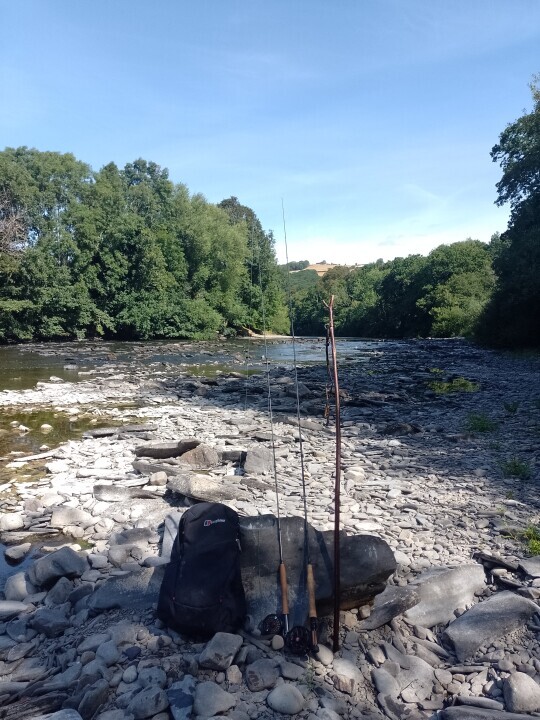 On Abernant - Andy Burgon
 Here in the sun-soaked South, it has been easy to forget that much of the North has been having quite a traditional English summer, by which I mean rather cold, wet and miserable, but good for fishing if nothing else. Julian Pavier from Retford with a friend fished the Tees at Barnard Castle and caught 12 trout and 6 grayling. Quite a number of blanks were being recorded on our shrunken Welsh border rivers, however. Mark Francis from Redditch fished up at Llyn Bugeilyn and caught 11 trout on “…anything small and black just trickled along the surface.” Despite the activity, a lot of takes were missed. A Stourbridge angler reported a “wet and windy day on Llyn Bugeilyn,” which must have been a refreshing change. By adjusting his shore position in the gale he managed to catch 13 trout. Simon Tarpey from Crickhowell fished the upper Usk at Penpont on an evening ticket: “Quiet until the gloaming when caught a Penpont Porker…” The water temperature was 17.8 degrees.
Michel Cross from Merthyr Tydfil recorded 4 trout from Llwyn On. Jaroslav Lipinski of Merthyr also reported 4 trout from the same fishery. Michael Spinola from Manston in Thanet was full of praise for the Doldowlod beat of the upper Wye where he caught 4 trout and 3 grayling. He caught 5 trout and 2 grayling from Craig Llyn on the following day, finishing his holiday with a trip to Doldowlod again: “Loved my 3 days on the Wye, the most beautiful river.” Andy Burgon from Bodenham had a contemplative sort of day at Abernant, but found time to catch 5 trout and 3 grayling. Barry Anderson from Gaydon had another visit to Craig Llyn, measured the water temperature at 16.5 degrees and caught 1 trout and 6 grayling, with 6 more grayling on the 11th. Further downstream Alex Greenwell of Cowbridge took 6 trout at Ty Newydd.
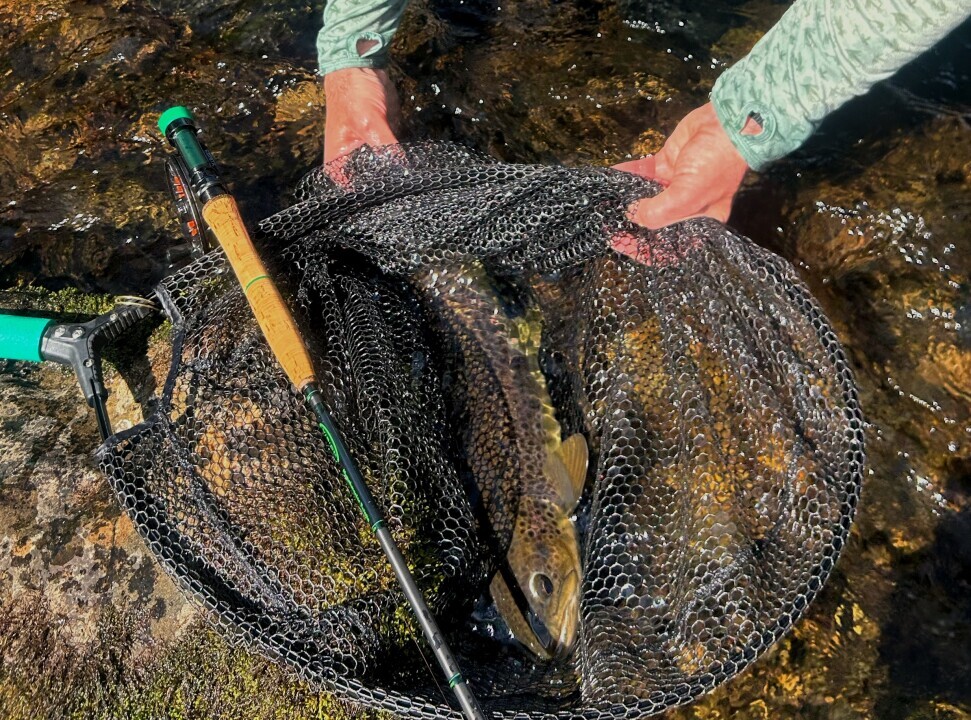 Doldowlod - MC from Guildford
 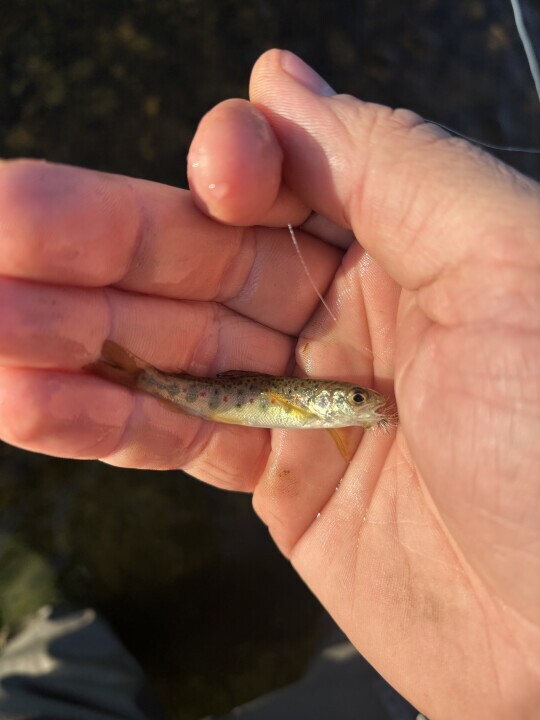 Upper Clochfaen - Eric Griffiths from Bromyard
 Robert Brookes of Mickleton took a trip to the North and reported 4 trout from the Tees at Eggleston Hall. He had 11 from the Raby Estate the following day. A visiting angler from Ricmond fished the Widdybank beat of the Tees at Raby Estate, and caught 10 trout on the duo. Cold water being let into the Tees from the great Cow Green reservoir was believed to have improved the fishing. A Guildford angler fished nymphs at Abernant on the upper Wye and caught 4 trout, 5 grayling and 2 chub. At Doldowlod later he had 8 trout to 45 cm and a grayling. Philip Yapp from Hereford led a team of 4 to Craig Llyn where they caught 2 trout and 21 grayling: “…most fish taken off the top with Quill Gordon, Sedge and Griffiths Gnat.” Dan Cristian Oprea with 2 friends had an early morning and a late evening session at Dan y Parc, the fishing periods being separated by a good lunch and a sleep. They caught 10 trout and 10 small chub which had taken a liking to dry flies. Keenan Williams from Ebbw Vale caught 3 trout at the Bargoed Park lake. Dan from Llyswen, who has a member’s rod on the Rectory beat, made an early morning visit catching 6 trout to 2.5 pounds and 3 chub to 3 pounds, followed by lunch in the hut. Rhian Bray from Redditch visited the Monnow at Skenfrith where he caught 8 trout, a grayling and a chub.
On 18th August RB from Gwent with a friend caught 7 trout from Llwyn On. Joe Davies from Merthyr Tydfil was not so happy on the following day: “The helicopter collecting water from the reservoir for wild fires dipped all day from various spots close to me. I had no chance.”
I must admit this is not an experience which has come my way. Leigh Jones and a friend from Cardiff fished on 19th August at Llwyn On: “Much cooler. Great day fishing. 8 fish between 2 anglers.” MK from London blanked at Talybont, but mentioned a heavy shower of rain during the afternoon, which must have been welcome, although it was hardly a drought breaker. A Hereford angler actually decided not to fish at Ty Newydd due to wind and rain that afternoon. Robert Payne from Craven Arms was another who blanked at Talybont and wondered if it might be a good idea to consider stocking the reservoir again. Personally I would like to keep it as a wild fishery, but I admit that it can be “dour” at times. Rhian Bray reported 8 trout and 5 grayling from the Rectory beat on the 21st. A Solihull angler reported a trout, a dace, and 6 grayling from Abernant. From the North GC from Newcastle on Tyne caught 6 trout from the Raby Estate water of the Tees, followed by 16 more a couple of days later; Tom Speak from Lancaster had 12 from the same beat and Nicholas Brett from Cambridge had 8. Eric Griffiths from Bromyard reported a single trout from the top of the Wye at Upper Clochfaen and sent in a photograph of the monster. Eric, I have examined your picture very carefully and I think I am prepared to swear that is actually a salmon. Right now it is about 3 inches long, but it would be good to meet it again in 3 or 4 years!
Rhodri Lewis and a friend from Neath were sliding around on slimy boulders in the Dolgau beat during a hard day’s work to take 4 trout and 2 grayling. Something very powerful in the Wall Pool at the top end stripped 20 yards of line off the reel before throwing the hook without being seen. I agree, it might well have been a salmon having made its way up there earlier in the year. Alternatively it may have been a large brown trout.
Around this time I found it virtually impossible to fish the Usk with spiders due to the numerous pieces of silkweed drifting down with the current. Every one of the three flies became coated with slime on each and every cast and subsequently needed laborious cleaning by hand.
Much awaited rain arrived on 28th August and some of the showers were briefly intense, but not enough to cause rivers to rise much. We were looking at sections of the Lugg around Leominster that day and it was truly difficult to work out which way the river was flowing, or indeed whether it was flowing at all. More serious rain of course arrived with the bank holiday; what else could we expect?
Coarse Fishing
Salmonids are more naturally at home in what the scientists used to call the Arctic or Cold Temperate zones. Cyprinids, on the other hand, seem to just revel in heat. Summer carp anglers will tell you how the big fish love to sun-bathe in lakes and ponds and certainly members of the cyprinid family came to the fore in catch returns during the hot weather this summer. AB from Oxford started August with a barbel and 11 chub from How Caple Court and watched a poacher being seen off by the bailiff. RE from Cwmbran caught 6 barbel after spotting a tightly packed shoal at Middle Hill Court. Stephen Pratt from Chertsey caught 2 barbel and 30 dace at Foy Bridge. The following day at Wyebank he was inconvenienced by extensive canoe traffic, but caught 2 barbel and a large number of dace and small chub. Alan Blackwell from Bampton led a team of 5 anglers at Middle Hill Court and by using a range of methods they caught 4 barbel and 44 chub. David Matthews of Staffordshire fished at the Trelough Pool and caught 7 bream to 5 pounds, 5 common carp to 12 pounds 5 ounces and a 2 pound perch. David Norris from Carshalton fished at Holme Lacy 3 and Lechmere’s Ley for 1 barbel and 45 chub. The following day he took 33 chub from a different area of the same beat, and 22 more on the day after that. JW from Chiswick struggled with overgrown access at Wyebank, but took 2 barbel.
Edward Shaw from Builth Wells fished at Upper Breinton where he caught a barbel, 6 chub and 6 perch, the last taken on an artificial shad lure. That sounds like an interesting day for a young angler. John Tilbrook of Woodbridge with two companions lost count of the number of chub, but apparently made an enormous catch at Holme Lacy 3 and Lechmere’s Ley. They were using free-lined bread crust and flake, a refreshingly simple and old school approach. DM from Birmingham had 10 chub at Fownhope 5. Robert Evans of Cwmbran fished at Foy Bridge for 10 chub while MP from Braunton reported 23 chub from Upper Breinton. Joe East from Kirtlington, Cherwell, reported 1 barbel and 8 chub to 4 pounds at Foy Bridge. Ronald Denne from Hillingdon was pleased with 5 barbel and 9 chub at Thomas Wood. Fownhope 5 was the venue for Brian Penfold with 2 friends visiting from Andover, who in a suitably laconic fashion reported 7 barbel and 18 chub: “Reasonable day, all things considered.” Fair enough.
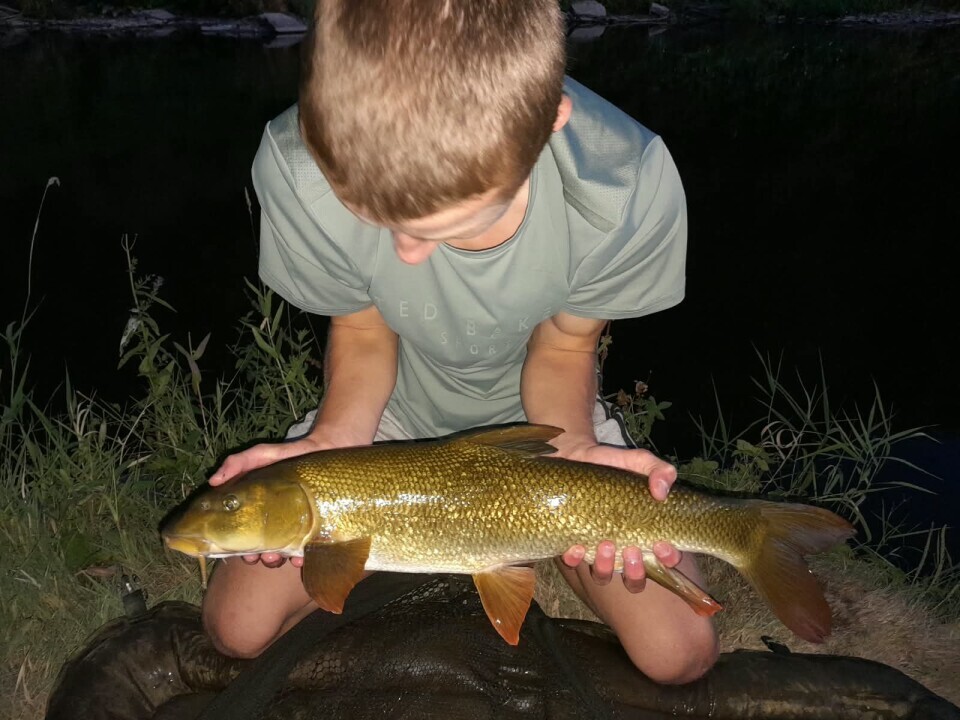
On 12th August Paul Hands from Bewdley fished at Foy Bridge and caught 9 barbel to 8 pounds and 13 chub to 4 pounds fishing fast water below a natural weir. However, he measured the water temperature at 24 degrees and the last couple of barbel needed time to recover. Accordingly he did the right thing and packed up early. Brian Penfold from Andover led a party of three anglers at Wyastone Leys, which after an early start they left at 11.30 concluding it was unfishable. The same party was booked at Caradoc for following day, 13th August, which turned out to be the peak of the latest heat wave with continuous sun throughout and afternoon air temperatures in the middle thirties. They caught 2 barbel and 30 odd chub, but, as Mr Penfold explained at length, between the heat and the silkweed continually coating tackle it was really very hard work: “The weed isn’t merely an inconvenience at the moment. It is utterly debilitating and today Caradoc felt more like an endurance test than a day’s fishing.”
This party had booked their fishing holiday 6 months before and, while it was nobody’s fault, conditions on the day were clearly a sore trial. DM from Birmingham reported 9 chub from Fownhope No 5, while Paul Evenden from Tavistock caught 2 barbel and 24 chub at Middle Hill Court.
CH from Westbury fished early at Lower Symonds Yat on the 12th, caught 3 barbel and watched them swim off strongly before closing the session mid-morning. Richard Bawdon from Bristol caught 8 chub to 3 pounds 5 ounces from the upper river at Boughrood. MC from Bromley and 2 companions were at Holme Lacy 3 and Lechmere’s Ley where they caught 40 chub on 16th August: “…non-stop action all day.” They recorded 50 more chub on the following day. On the final day of their Holme Lacy fishing they netted 2 barbel and 40 chub.
Keith Cakebread with a friend from West Wickam fished at Foy Bridge for 1 barbel at 6 pounds 2 ounces and 27 chub weighing from 2 pounds upwards. AS from West Drayton with a friend came to Wyebank on 17th August: “We refused to fish on arrival. River far too low today. Too shallow to fish effectively. Lots of rubbish and litter.” One of them did fish at Middle Ballingham and Fownhope No 8 the following day and accounted for 50 chub and 2 dace. Rhys Enfield from Birmingham led a party of 4 anglers on Foy Bridge and the Creel on 18th August, catching in total 28 chub to 3 pounds, 3 barbel to 8 pounds, and a dace. The following day they had 21 chub and 5 dace. KC from West Wickam with a friend were stalking chub on the shallows at Holme Lacy 3 and Lechmere’s ley. They caught 9 to 4 pounds 13 ounces. Andrew Smith from Norton in Hales fished at Foy Bridge on 20th August and caught 5 barbel (including his first) and 5 chub. He reported that he was disappointed to pick up a lot of discarded nylon of different lengths. It used to be thought – recommended by Hugh Falkus in fact – that the best way to dispose of unwanted nylon was first to wrap the whole length around two fingers and then cut through it all with scissors, thus ending with short lengths which would be most unlikely to entangle and trap wild life. That was before we realised how much micro-plastic and other man-made material in small fragments which will not degrade naturally is now out in the environment, is even inside the bodies of tiny creatures, and according to predictions will be for centuries to come. Best to take it all home and dispose of it properly with the household waste.
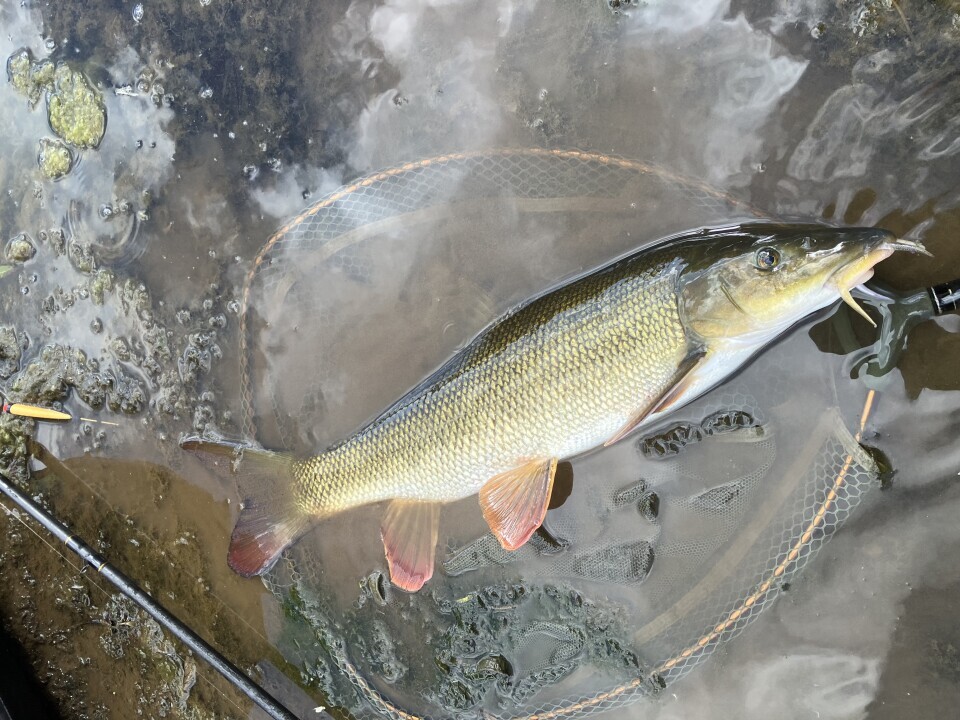 Foy Bridge - Stephen Pratt from Chertsey
 There was apparently some great fishing at Trelough Pool. Matt H from Stafford reported a 9 pounds carp, but “…I spent most of the day landing my girl friend’s numerous carp.” For her part, NK from Stafford wrote: “A wonderful day. 4 carp, 9 pounds, 9 pounds 2 ounces, 12 pounds, 15 pounds 5 ounces, all on fruit boilies. Thanks WUF.” Gary Walker from Reigate didn’t give the numbers, but reported a mixed bag of carp, bream, roach and perch along with 2 eels: “Another great day at Trelough Pools” A from Wales reported 2 bream, 2 common carp and a roach from the same water.
At Middle Hill Court on 21st August PS from Stroud “…met Stefan, a humble and pleasant man…” who gave some good advice although the river was of course low. Float fishing in fast water with luncheon meat and sweet corn produced 5 barbel and 12 chub. Stefan the keeper at Middle Hill Court knows his water very well. RR from Bristol reported 11 barbel and 10 chub from Thomas Wood. DM from Birmingham scored 12 chub at Fownhope 5, while Jay P with a friend from Basingstoke recorded 60 chub in low and weedy water at Foy Bridge. Paul Young from Burbage fished at Foy Bridge and caught 2 barbel and 12 chub: “Good day fishing off the rocks…”
TW from Basingstoke sent in a remarkable report from Lower Carrots and Luggsmouth: 5 chub, 1 barbel, and [wait for it] a river carp at 33 pounds 12 ounces. A 33 pounds 12 ounce wild river carp is certainly one to remember. Such fish, possibly up to 40 pounds, are known or believed to inhabit parts of the Wye, but they do not turn up every day. I would love to know some more details, such as was it a common or mirror and is there a photograph? And I wonder where it was: possibly in the the Lugg junction pool?
26th August brought good fishing for Paul Turner from Royston with a friend at Fownhope 5, where they caught 7 barbel and 40 chub: “Amazing fishing, never caught so many chub all at 3 pounds or more and barbel in perfect condition.” Gary Walker of Reigate was at Holme Lacy 3 and Lechmere’s Ley with two friends: “A fantastic day at Holme Lacy, made our way to the far end of the beat and waded out mid-river to trot for chub on the centre pin. Great sport all day and to be honest the total could have been even more as we lost count of the fish total at about 80 chub. We also landed a couple of barbel, all fish netted and returned safely. Can’t wait to come back again.”
Still Dry
There was a distinctly Mediterrranean look to the British countryside for the final weeks of this summer. The landscape was seen as more of a patchwork than ever, with light tan or fine gold fields, looking much the same at a distance whether dry grass or stubble, divided up by dull green trees and hedges. Prolific early growth in the hedges had narrowed the lanes and the trimming machines were awaited by motorists trying to squeeze past each other. The woods were already starting to change colour, dry leaves already starting to fall. The ground under our feet was dry dust or baked and cracked. On the heights, best viewed from the Heads of the Valleys road, drivers could see that wide swathes of South Wales uplands were still burning and the smell of the smoke drifted on the wind.
Mainly due to cool nights during the final week of August, averaged temperatures of both air and water were now rather less. Merthyr Tydfil Anging Alliance re-opened their Usk and Wye fisheries on Wednesday 26th . Bristol Water Company reinstated catch and release fishing on their waters. We were still waiting for any significant rain. Afonydd Cymru reported that never have Welsh river levels been recorded so low. Some of those with reservoirs in the headwaters withstood the drought better than others, including the upper Wye between Rhayader and Builth, sustained to some extent by cool water from the Elan dam complex, and the Towy which is always cooled by water from beneath the Llyn Brianne dam. However, we could have done without a sewage pollution event around Llandeilo, which resulted in the public being advised not to swim due to E-Coli. Quite apart from angling and wildlife, The Towy is a drinking water conduit for much of South Wales.
Many of the tributaries have suffered more than the main rivers. The Irfon, which often experiences rapid and drastic changes in level, is now exceptionally low. The flow of the Cynrig brook which comes into the Usk at the top of the Abercynrig beat became so reduced that NRW, who maintain a hatchery a few hundred yards upstream, grew concerned about the young brown trout being nurtured in the stew ponds there. Some fingerlings from the site were donated to local angling clubs for stocking into lakes. Smaller brooks and upland dew ponds dried out.
Fishing through the eclipse
Apart from the heatwave, 12th August was the day of eclipse mania. I am trying to remember when exactly it was – it could not have been 1999 – but I know I once deliberately fished through a partial eclipse. Arthur Ransome had written about this and the legend that fish would suddenly and dramatically come onto the take during the low light period. That account had intrigued me so that it seemed to be an experiment worth making. I do remember that it was a cloudy day, so that when the appointed time came nothing very exciting was to be seen in the sky except for a general and quite slight darkening for a few minutes. I did notice song birds went quiet briefly, but the trout didn’t react at all – no rises and no takes. I think Arthur Ransome had the same experience almost a century earlier – nothing to report here! Did anybody fishing on the evening of 12th August notice anything very special?
Afghanistan 2021
Anybody concerned about the ending, five years ago, of the West’s most recent 20 year adventure in Afghanistan, might be interested to watch Kabul, a six-part drama made by Cineteve and currently available through the BBC. Following President Biden’s unilateral decision to evacuate US forces and walk away from the situation, it portrays the chaos at Kabul airport as foreign embassies attempted to evacuate dual nationals and visa holders while the Taliban came sweeping back into power. The drama follows the activities of the Italian, French and German embassy teams. The British are not mentioned. The Americans don’t come out of it well. And nor should they. It was a shameful decision and I remember our own Defence Minister in tears at the time.
Caspian Tiger
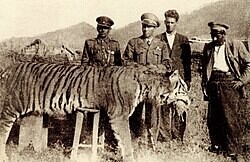 Caspian Tiger North Iran
 In the Forest of Dean I suppose we are getting quite used to dealing with introductions: most recently of feral boar, beavers and pine martens. Introductions, intended or not, have always provided a subject for debate; the talk used to be all about the grey squirrels and then later signal crayfish. My father used to get a shilling a tail for shooting grey squirrels. Last month, the first reintroduced Caspian tiger equipped with a monitoring collar was released into an open wetland nature reserve in Kazakhstan according to a carefully worked out international plan. 150 years ago a population of this huge predator could be found thinly spread across Central Asia from China to the Caucasus, to Turkey and in mediaeval times supposedly even as far west as the Ukraine. The tiger was never a creature of deserts or steppes, but lived in the reed beds of widely separated river corridors where it mainly predated on wild pigs and deer. During the 19th century it was intensively hunted by Russian sportsmen through Turkestan, Iran and Afghanistan, while their British equivalents hunted the Bengal tiger in India. By the end of the 20th century the Caspian tiger was believed to be almost certainly extinct, the last known specimens having been killed in the Hakkari province of Eastern Turkey during the 1980s. It seems extraordinary that it managed to survive as long as it did.
However, geneticists have now checked the DNA make-up of the modern Siberian or Amur tiger against preserved hides of Caspian specimens in museums and are convinced that the two are so similar as to form different branches of the same race with no problems to be anticipated even if inter-breeding between survivors takes place. A gift from Vladimir Putin of four Amur tigers has been made available for new introductions and it is determined that the prey populations in various riverine environments of Central Asia will be enough to sustain a small nucleus of predators. The monitoring scheme in Kazakhstan apparently means that remote villages will be warned if a Caspian/Amur tiger, one of the largest cats which has ever existed, comes within 5 kilometres of human habitation. Personally, I would only wish to meet one under very controlled circumstances. Will the population spread along Central Asian rivers as planned? What price a spot of wild adventure fishing through the reed beds of the Hari Rud in future?
Bonneville Salt Flats
It’s easy to overlook the record of one field in which UK sportsmen and engineers have actually performed rather well for many years. There is at least something we are still good at! They know all about it on the legendary Bonneville salt flats of Utah, a place I have never seen but we had a reverence for it in those long-ago days when I used to play around with Triumph motorcycles. Back in 1963 Craig Breedlove was the hero who set a new land speed record with Spirit of America, which was really a jet fighter just about touching the ground on 3 wheels, so technically, under the existing rules and to a certain amount of bemusement all round, it was rated as a motor cycle and sidecar. Breedlove’s jet powered constructions eventually recorded 600 mph. In 1997 RAF pilot Andy Green took the jet-powered record up to 763 mph with Thrust SSC and broke the sound barrier in the process. Congratulations now to sponsor Lord Bamford, driver Andy Green and the JCB team who have once more taken a land speed record under the sun on the blinding white salt lake. This record was for genuinely wheel driven vehicles and involved a two way pass averaging 406.32 mph. The hydrogen powered car might have achieved even more; RAF pilot Green didn’t engage 6th gear and was in fact restricted by the length of the cleared runway available for winding up speed and slowing down.
Oliver Burch